

By 2030, we will significantly reduce our own CO2e emissions as well as those along the supply chain. Our more stringent climate target, which applies as of 2025, highlights our ambition. We are constantly working to use energy even more efficiently, and we generate and obtain our electricity from renewable sources.
Strategic integration of climate change mitigation (E1-1)
The need for consistent climate protection remains high, even if it has recently sometimes been overshadowed by acute economic and geopolitical challenges in public debate. Although these developments also affect BLG LOGISTICS, we remain committed to making our contribution to decarbonizing the logistics industry and global supply chains.
A key focus of our sustainability strategy is therefore the effective reduction and management of our own emissions as well as those across the supply chain. The basis of this is our climate protection target, which has been validated by the independent Science Based Targets initiative (SBTi). In 2025, this target was tightened further in order to actively contribute to limiting global warming to 1.5°C. At the time of publication of this report, validation of the updated target had not yet been completed by the SBTi. To achieve our climate target, we are pursuing a clearly structured decarbonization plan with five strategic fields of action.
Our climate target at a glance
BLG LOGISTICS has defined a climate target that is aligned with the 1.5°C goal of the Paris Agreement (baseline year: 2018).
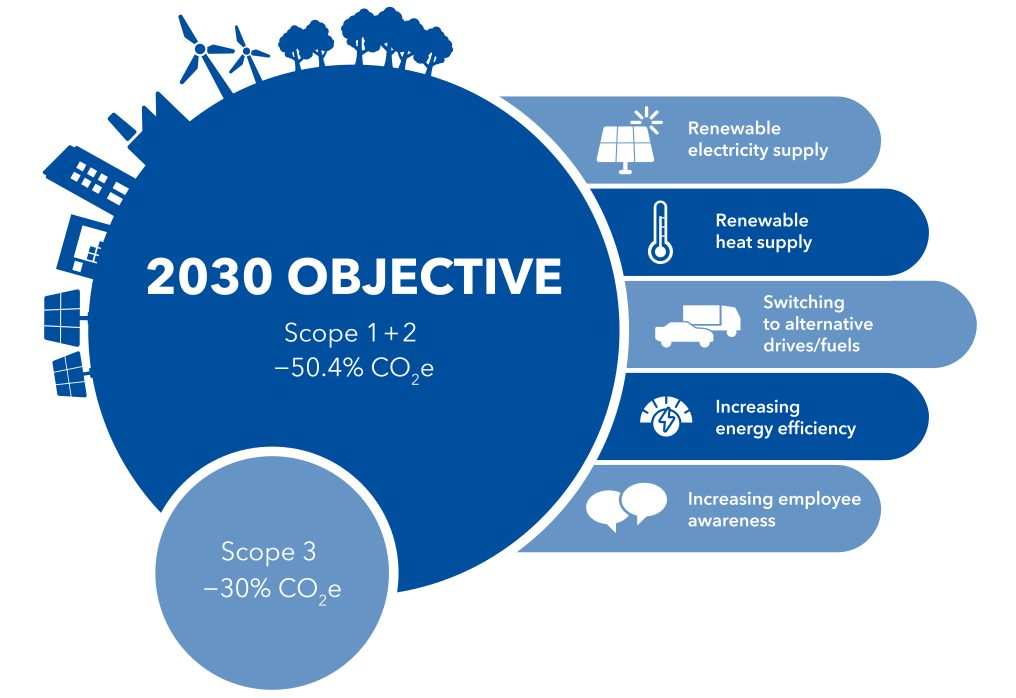
Both the target and the decarbonization plan were developed in close coordination with the Board of Management and senior management, and are an integral part of the Group-wide corporate strategy. Our decarbonization roadmap is one of the strategic initiatives that will significantly shape the direction of our company in the coming years. It not only contributes to the achievement of Group-wide climate targets but also strengthens our competitiveness and positioning as a responsible company with its sights firmly on the future. Through regular evaluations and reporting, we ensure ongoing monitoring of progress and adjustments to the decarbonization strategy when needed, in response to new developments and regulatory requirements.
We call all of these objectives and projects our “Climate Mission”. Our absolute emission reduction also has a positive impact on the GHG inventories of our customers, who account for our emissions as Scope 3 emissions. On request, we do customer-specific calculations for these and are open to joint decarbonization projects.
Climate vulnerability analysis (E1-2, E1-3)
In the reporting year, we initiated the company-wide implementation of a standardized climate vulnerability analysis. In this process, we assess the probability of occurrence and the potential impacts of various climate hazards on our business activities. The analysis follows recognized standards and considers both acute and chronic risks. The assessment is conducted across different time horizons (short-, medium- and long-term) and applies both a 1.5°C-compatible low-emission scenario and a high-emission scenario (RCP 8.5).
The rollout of the analysis at individual sites will be further intensified in the coming months. In addition, we analyze the vulnerability of our business activities, including associated supply chains, to climate change, and assess the transitory transition risks.
The results are integrated into Group-wide opportunity and risk management and feed into the further development of our climate strategy and the derivation of concrete actions. Responsibility for implementation and assessment lies with the Sustainability Department, in close collaboration with relevant internal stakeholders, particularly Business Continuity Management (BCM). The findings also inform the evaluation of our IROs and are disclosed transparently as part of the annual Sustainability Report.
Management of impacts, risks and opportunities
An overview of the material impacts, risks and opportunities can be found in the chapter General information under Material impacts, risks and opportunities and disclosure requirements included in the Sustainability Statement (IRO-2).
Policies related to climate change mitigation and adaptation (E1-4)
The environmental and energy policy of the BLG LOGISTICS GROUP provides the formal framework for managing climate-related impacts, physical and transition risks, as well as climate-related opportunities, and applies to all fully consolidated entities of the company. It defines the principles, responsibilities and governance mechanisms relating to climate change mitigation and energy efficiency.
The policy includes commitments to environmental protection and the prevention of environmental impacts, the systematic measurement and continuous reduction of energy consumption and greenhouse gas emissions, and the improvement of energy efficiency. Environmental and energy aspects are taken into account in procurement processes. Compliance with legal, regulatory and customer-specific requirements is ensured. The necessary resources are provided for implementation, and transparent, KPI-based reporting is ensured. Suppliers are integrated via the Supplier Code of Conduct. Responsibility lies with the Board of Management and all senior executives; the document is drawn up and updated by the Sustainability Department. Information is available via the BLG website, the central document platform and the employee app.
In addition to the above-mentioned guideline, the BLG LOGISTICS GROUP operates certified environmental and energy management systems in accordance with ISO 14001 and ISO 50001. This ensures compliance with legal and customer requirements. Currently, 27 sites in the CONTRACT Division and 19 sites in the AUTOMOBILE Division are certified in accordance with ISO 50001. Since 2014, our environmental management system has also been certified in accordance with ISO 14001 at all German car terminals and AUTOMOBILE Division transport bases, as well as at 13 CONTRACT sites.
Actions and resources related to climate change mitigation (E1-5)
Concrete measures and the targeted allocation of resources are critical to achieving our climate objectives. Each action implemented, from the efficient use of renewable energy and innovative technologies to employee awareness initiatives, contributes to reducing greenhouse gas emissions.
Through the continuous development and monitoring of measures, we create the foundation for resilient, responsible and future-oriented business development. Here we provide insight into activities within our five decarbonization levers.
Lever: Regenerative electricity supply
At our sites, we systematically source electricity from renewable energy – both through company-owned installations and external procurement models. A total of four installations at three sites currently supply us with locally generated renewable electricity, the largest with an installed capacity of approximately 9 MWp. Expansion is ongoing. For example, a photovoltaic system with a capacity of 20 MWp is being developed in Kelheim on carport structures, which also provide weather protection for vehicles.
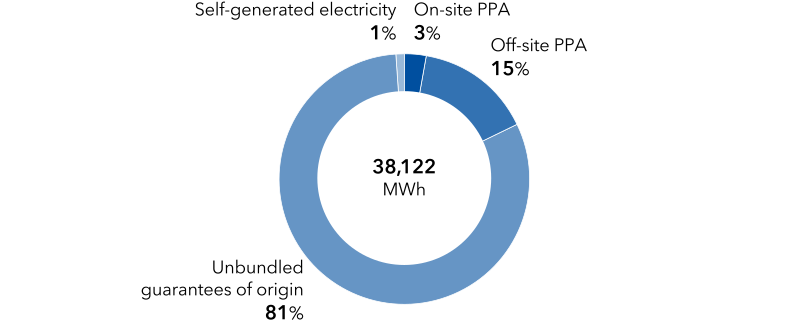
Since complete self-sufficiency through local solar panel installations is unlikely to be feasible in the future, we are relying on a combination of procurement methods. In addition to generating green electricity at our sites, which we use directly on-site, we also conclude direct power contracts with producers of renewable energies external to our sites, known as off-site power purchase agreements (PPAs). Remaining demand is covered through high-quality, unbundled guarantees of origin, preferably from facilities less than six years old. In the reporting year, we received the guarantees mainly from a newly built onshore wind farm near Fehmarn in Germany. Further details on the composition of green electricity in the reporting year are provided in the chapter Metrics and targets.
Lever: Regenerative heat supply
In addition to fuels and electricity, heat demand is a key lever for reducing emissions. Currently, the required space heating and process heat are mainly provided by natural gas. Two of our sites sourced local and district heating in the reporting year. Since 2024, our logistics site C3 in Bremen has been supplied with heat via our first air-to-air heat pump. This is a bivalent system in which peak load coverage is achieved via gas-fired tube heaters. Compared with a monovalent system, significantly higher annual performance factors are achieved, so the system runs particularly efficiently. In the 2025 reporting year, the heat pump generated around 1,000 MWh of heat, which reduced natural gas consumption at the site by around 43 percent. In particular, the combination of heat pump and PV system represents a future-proof, low-emission option for heating the property. Through the simultaneous procurement of renewable electricity, site-related emissions were reduced by 215 tCO2e.
Lever: Alternative drive systems and fuels
Alternative drive systems and fuels are key to our decarbonization strategy, with a particular focus on the electrification of heavy goods transport. As a logistics service provider with extensive operational experience, our goal is to systematically integrate innovative drive technologies into our fleet. Initial insights have already been gained from pilot projects involving electric trucks.
At selected sites, we are currently planning charging infrastructure for electric trucks. This will be linked to local electricity generation from a photovoltaic installation. Our objective is to establish an ecologically sound and economically viable operating model in which part of the electricity required for operating electric trucks is generated locally from renewable sources. The operational deployment of electric trucks is planned to start in summer 2027.
Until emission-free drive systems are widely available, we consider the renewable fuel HVO as a bridging technology that can be used without modifying our fleet. During the reporting year, we used approximately 60,000 liters of HVO for our transport services, saving around 174 tCO2e compared to conventional diesel. HVO can make a significant transitional contribution to achieving our climate targets while simultaneously reducing emissions for our customers. A challenge when using HVO is the credibility of emission reductions to shippers. In cooperation with a service provider, we offer a book-and-claim approach. This enables emission savings achieved through HVO to be tracked and reported at the shipment and customer level.
Lever: Increasing energy efficiency
Effective energy management can bring both environmental and economic benefits and is therefore critical for us to achieve our targets when it comes to climate protection. We primarily use it to use energy intelligently and, above all, to increase our efficiency. In line with this, our environmental and energy policy commits us, among other things, to continuously reducing our energy consumption and our GHG emissions. For more information, please visit www.blg-logistics.com/en/sustainability.
We regularly collect and analyze our consumption data, identify savings potential, and invest specifically in energy-efficient technologies. Our Group-wide energy management system, certified in accordance with ISO 50001, supports continuous optimization. Our energy officers collect the required information by recording, validating and evaluating energy data relating to the individual sites in a decentralized process. The only exceptions are sites whose energy needs we cannot control ourselves. The Corporate Sustainability Department combines the consumption of all consolidated companies and uses this to prepare the annual energy and CO2 inventory. As part of our ESG reporting, we also record and report our key performance indicators relating to energy and greenhouse gases on a quarterly basis. To further improve transparency and data quality, we use the EnEffCo energy management software, which provides support by more detailed and largely automated recording and evaluating our energy consumption so we can better identify specific savings potentials.
In addition, a procedure was developed for energy efficiency measures that applies company-wide, standardized energy price scenarios as part of net present value calculations. This provides a more robust basis for investment decisions and planning in the context of our decarbonization plan. Energy measures are systematically assigned to the defined decarbonization levers and reported accordingly, both internally and externally.
In 2025, we successfully continued and completed numerous projects to improve energy efficiency, including measures to retrofit our buildings and operational areas with energy-efficient LED lighting and to optimize lighting control through motion and daylight sensors. Our C3 Bremen logistics center demonstrates how effective this combination is: compared to conventional LED hall lighting, we were able to reduce the energy required for lighting the property by 81 percent in the reporting year. Overall, the lighting measures implemented during the reporting year result in annual energy savings of approximately 136 MWh.
Efficiency measures also make an important contribution in the transport sector. Our BLG AutoTransport company offers car transport for new and used vehicles and, in the reporting year, maintained its own fleet of 200 trucks in Germany, all of which meet the EURO 6 standard. In 2025, 32 efficient new vehicles were added to the fleet. The continuous renewal of the fleet, combined with intelligent route planning, contributes to a steady reduction in absolute fuel consumption. As a result, we were able to further reduce average fuel consumption to 28.6 l/100 km, compared with 29.3 liters in the previous year.
Lever: Employee awareness
Keeping our employees informed and engaged on energy efficiency topics is also a building block of our energy management strategy. For this purpose, we use different formats from training sessions to posts on our digital channels. For example, we share news on the progress of our measures in our employee app, such as the expansion of charging infrastructure for employee cars. An e-learning module on environmental and energy management raises the awareness of our employees. Around 1,600 of them have already successfully completed the online training. In this way, we ensure that our employees are aware of our environmental and energy policy and the associated corporate objectives.
Energy management and efficiency are regularly discussed with the energy officers at our sites. In this context, specific information is provided on legal developments and savings potentials. Conversely, energy officers can raise relevant topics and questions. In the reporting year, energy officers from across Germany once again met for a two-day technical workshop at one of our sites, focusing in particular on the identification, evaluation and documentation of energy-saving measures.
In the area of employee mobility, the mobility survey conducted regularly in the third quarter serves as a key basis both for Scope 3 accounting and for capturing employee needs and expectations. A central aspect is the provision of charging infrastructure at our German sites. In the reporting year, nine additional charging points were commissioned at five locations. At all sites, infrastructure is designed to allow for the installation of additional charging points. As of the end of the reporting year, a total of 59 charging points at 12 locations were in operation for private employee mobility.
Driver behavior assessment, combined with training in fuel-efficient driving, also contributes to reducing fuel consumption across our AutoTransport truck fleet.
Metrics and targets
Targets related to climate change (E1-6)
Field of action |
|
Target horizon and objective |
|
Status 2025 |
|
|
||||
|---|---|---|---|---|---|---|---|---|---|---|
Climate change mitigation |
|
2030 (base year: 2018) |
|
|
|
|
||||
Energy management |
|
Annually |
|
|
|
|
||||
|
||||||||||


 Pending
  In progress
 The targets are based on an absolute reduction in greenhouse gas emissions compared with the base year and apply independently of company growth. 2018 was selected as the base year as it represents the first year with a complete data set, particularly for Scope 3 emissions. Progress toward achieving these targets is regularly reviewed as part of our company-wide CO2 monitoring and reported annually.
Energy consumption and mix (E1-7)
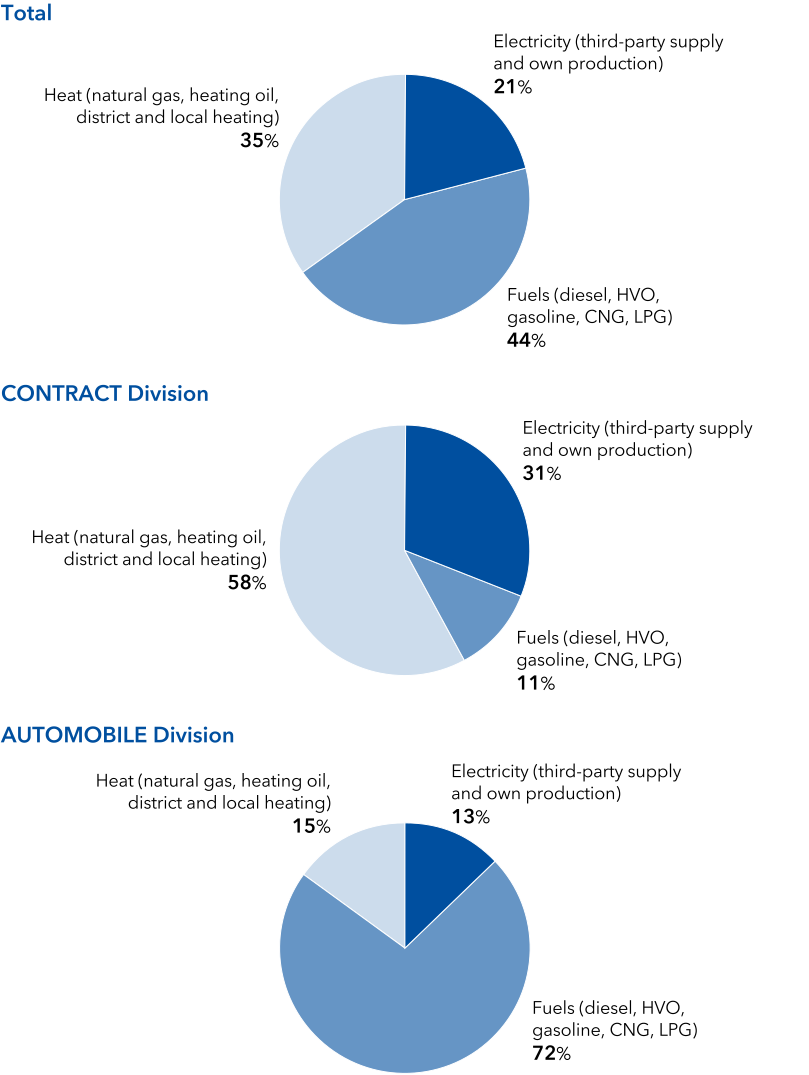
Compared to the previous year, we have once again reduced our total energy consumption by a significant 3.4 percent, to 182 GWh. This decline is reflected in particular in reduced fuel consumption. In addition to efficiency measures, business-related and weather-related factors beyond our direct control also had an impact.
|
|
Unit |
|
2025 |
|
2024 |
|
2023 |
|---|---|---|---|---|---|---|---|---|
Energy from coal and coal products |
|
MWh |
|
– |
|
– |
|
– |
Energy from crude oil and petroleum products |
|
MWh |
|
85,545 |
|
91,970 |
|
99,742 |
Energy from natural gas |
|
MWh |
|
55,302 |
|
53,052 |
|
60,018 |
Energy from other fossil sources |
|
MWh |
|
1,698 |
|
2,578 |
|
1,594 |
Energy from purchased or acquired electricity, heat, steam and cooling from fossil sources |
|
MWh |
|
665 |
|
39,283 |
|
42,564 |
Total fossil energy consumption |
|
MWh |
|
143,210 |
|
186,883 |
|
203,918 |
Proportion of fossil energy sources in total energy consumption |
|
% |
|
78.72 |
|
99.19 |
|
99.81 |
Energy from nuclear sources |
|
MWh |
|
– |
|
– |
|
– |
Proportion of nuclear energy sources in total energy consumption |
|
% |
|
– |
|
– |
|
– |
Fuel consumption from renewable sources |
|
MWh |
|
599 |
|
77 |
|
– |
Energy from purchased or acquired electricity, heat, steam and cooling from renewable sources |
|
MWh |
|
36,631 |
|
– |
|
– |
Consumption of self-generated renewable energy, excluding fuels |
|
MWh |
|
1,491 |
|
1,452 |
|
392 |
Total renewable energy consumption |
|
MWh |
|
38,721 |
|
1,529 |
|
392 |
Proportion of renewable sources in total energy consumption |
|
% |
|
21.28 |
|
0.81 |
|
0.19 |
Total energy consumption |
|
MWh |
|
181,931 |
|
188,412 |
|
204,310 |
The significant increase in the share of renewable energy sources is primarily attributable to the fact that, for the first time in the reporting year, 100 percent of our electricity demand was sourced from renewable energy. This means that the objective of a full transition to green electricity has been achieved. In 2025, approximately 1,500 MWh of electricity was generated from photovoltaic systems and used directly at our sites.
Electricity procurement mix 2025, broken down by generation method
Percentage share of energy consumption 2025 broken down by energy source
Gross scope 1, 2, 3 and total GHG emissions (E1-8)
Our greenhouse gas inventory is prepared in accordance with the Greenhouse Gas Protocol (GHG Protocol). We distinguish between Scope 1 (direct emissions from the combustion of natural gas, heating oil and fuels), Scope 2 (indirect emissions from the production of electricity and district heating) and Scope 3 (other indirect emissions). Emissions are calculated in CO2 equivalents (CO2e), which include, in addition to carbon dioxide, other climate-relevant gases (see Glossary for details). For the calculation of emissions from fuels, we use well-to-wheel emission factors from the Global Logistics Emissions Council (GLEC), which take into account emissions from energy supply through to end use, including the proportion of biodiesel and ethanol. Further emissions are calculated using the emission factors from the Global Emissions Model of Integrated Systems (GEMIS) of the International Institute for Sustainability Analysis and Strategy (IINAS), from the German Federal Environment Agency and from the UK Department for the Environment, Food and Rural Affairs (DEFRA). Updates to the underlying emission factors are applied on a regular basis, including retrospectively. The emission factors used for electricity are market-based and site-specific, depending on the respective energy supply company. For individual sites, particularly our international subsidiaries, information on the electricity supplier’s energy mix is not always available; in such cases, the corresponding country mix from GEMIS is applied. Since 2025, we have covered our entire purchased electricity volume with renewable energy certificates sourced from the respective regional systems and registries: the German Environment Agency’s Guarantees of Origin Register (HKNR) for Germany, Guarantees of Origin (GoOs) for Poland, International Renewable Energy Certificates (I-RECs) for South Africa, and Renewable Energy Certificates (RECs) for the USA. Upstream emissions are accounted for using a technology-based approach.
Scope of our carbon accounting
BLG LOGISTICS reports its greenhouse gas emissions in accordance with the Greenhouse Gas Protocol and covers emission categories under Scopes 1, 2 and 3.
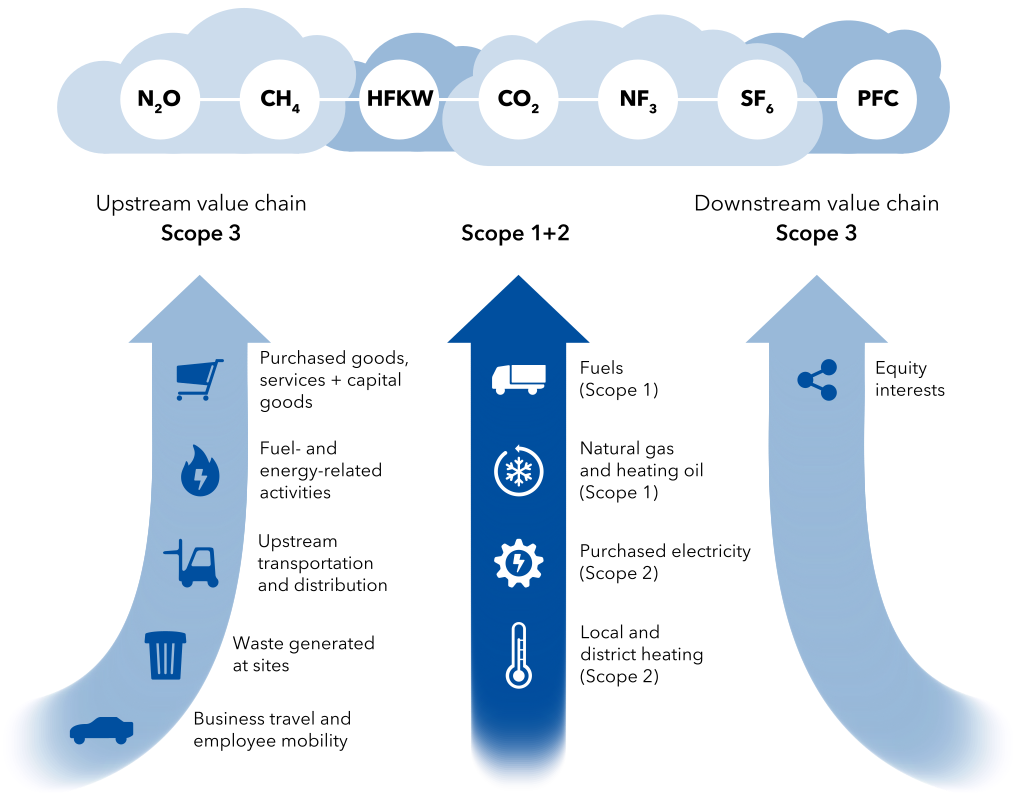
In identifying relevant Scope 3 emission sources, we follow the 15 GHG Protocol categories and take into account those that are significant for us:
Purchased goods and services (3.1) and capital goods (3.2): Emissions arising from these categories are calculated using the spend-based method. In this approach, total procurement volume is allocated to defined product groups and multiplied by the corresponding emission factors from Exiobase.
Fuel- and energy-related activities (3.3): With regard to the upstream chains of primary energy sources, we record the emissions from the production and transport of the energy we use, and we take into account the share of emissions from grid losses. The basis for this is energy consumption data from our energy management system, which is combined with corresponding emission factors.
Upstream transportation and distribution (3.4): This includes third-party transport services by truck, rail and ship. In order to calculate emissions from truck transport, in some cases we use software that is accredited in accordance with international standards for greenhouse gas accounting. Where feasible, it combines transport order data with telematics data not only from our own trucks, but also from selected subcontractors’ trucks, so that the calculation of emissions is based on primary data as much as possible. Emissions from rail and maritime transport services are calculated using activity-based methods.
Waste generated in operations (3.5): Emissions are calculated based on annual waste volumes collected as part of waste management and broken down by waste stream, using emission factors from DEFRA.
Business travel (3.6) and employee commuting (3.7): We record emissions from daily employee commuting, business travel using private and company vehicles, rental cars and air travel. The basis for commuting data is our annual employee mobility survey, which was also conducted in 2025. Emission factors for fuels are derived from the GLEC Framework, while emission factors for transport distances by different modes are sourced from DEFRA and the German Federal Environment Agency.
Investments (3.15): In this category, we account for a proportional share of emissions from our joint venture EUROGATE as well as other investments. EUROGATE represents the vast majority, at approximately 91 percent. Associate companies report either their calculated CO2 emissions or their energy consumption to us for the reporting year. In the latter case, CO2 accounting is carried out in the same way as for our Scope 1 and Scope 2 emissions.
Within Scope 3, approximately two-thirds of emissions relate to the procurement of goods, services and capital goods, as well as the activities of our sub-transport companies.
Percentage share of Scope 3 emissions in 2025, broken down by category
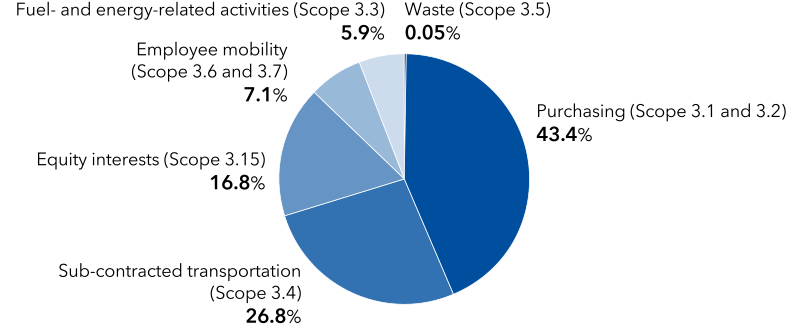
The following table presents the current CO2 inventory alongside base year 2018, broken down by reported scopes. Metrics that serve as target indicators are highlighted in bold and supplemented with the corresponding target values. Biogenic emissions from the use of biofuels are not included in the inventory and amounted to approximately 1,454 tCO2 in 2025. Fleeting greenhouse gas emissions, primarily from the operation of air conditioning systems, are also excluded due to their limited scope. These amounted to approximately 80 tCO2e in 2025. However, these emissions will continue to be recorded and disclosed annually.
|
|
2018 |
|
2025 |
|
|
|
|
|
2030 |
|---|---|---|---|---|---|---|---|---|---|---|
|
|
Emissions |
|
Emissions |
|
Reduction – ACTUAL |
|
Reduction – TARGET |
|
Reduction target |
Scope 1 |
|
45,196 |
|
33,130 |
|
-26.70 |
|
|
|
|
Scope 2 (market-based) |
|
15,548 |
|
81 |
|
-99.48 |
|
|
|
|
Scope 2 (location-based) |
|
23,042 |
|
16,020 |
|
-30.48 |
|
|
|
|
Scope 1-2 (location-based) |
|
68,238 |
|
49,150 |
|
-27.97 |
|
|
|
|
Scope 1-2 (market-based) |
|
60,744 |
|
33,211 |
|
-45.33 |
|
-29.40 |
|
-50.40 |
Scope 3 – Total |
|
214,893 |
|
172,932 |
|
-19.53 |
|
-17.50 |
|
-30.00 |
Scope 3.1: Purchased goods and services |
|
32,210 |
|
51,635 |
|
60.31 |
|
|
|
|
Scope 3.2: Capital goods |
|
25,127 |
|
23,464 |
|
-6.62 |
|
|
|
|
Scope 3.3: Fuel- and energy-related activities |
|
15,551 |
|
10,129 |
|
-34.87 |
|
|
|
|
Scope 3.4: Upstream transportation and distribution |
|
92,021 |
|
46,326 |
|
-49.66 |
|
|
|
|
Scope 3.5: Waste generated in operations |
|
367 |
|
82 |
|
-77.61 |
|
|
|
|
Scope 3.6: Business travel |
|
2,253 |
|
1,444 |
|
-35.94 |
|
|
|
|
Scope 3.7: Employee commuting |
|
14,922 |
|
10,786 |
|
-27.72 |
|
|
|
|
Scope 3.15: Investments |
|
32,442 |
|
29,066 |
|
-10.41 |
|
|
|
|
Scope 1-3 (market-based) |
|
275,637 |
|
206,143 |
|
-25.21 |
|
|
|
|
Scope 1-3 (location-based) |
|
283,131 |
|
222,082 |
|
-22.27 |
|
|
|
|
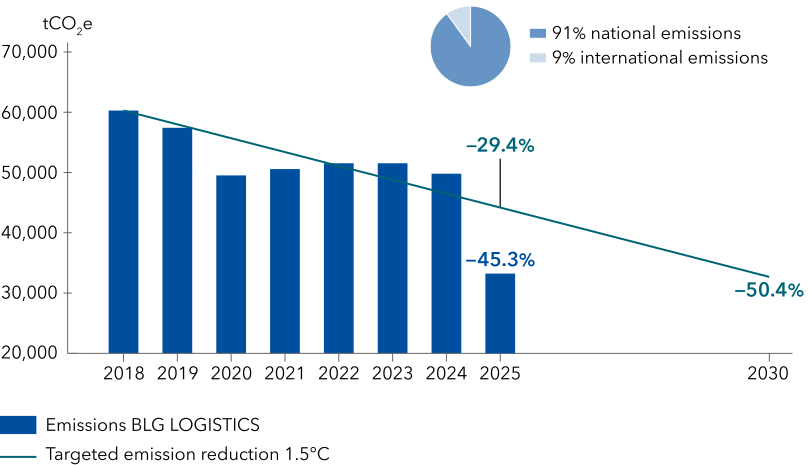
In order to achieve the Scope 1 and Scope 2 target, it is necessary to reduce our CO2 emissions by 4.2 percent annually compared to 2018. Overall, we reduced our greenhouse gas emissions in 2025 by 45.3 percent compared with 2018, significantly exceeding the interim target of a 29.4 percent reduction set for the reporting year. This resulted in a significant reduction in emissions in 2025, especially with the complete transition of our electricity supply to renewable sources.
Absolute greenhouse gas emissions (Scope 1 + 2) from 2018 to 2025 and objective for 2030 (tCO2e)
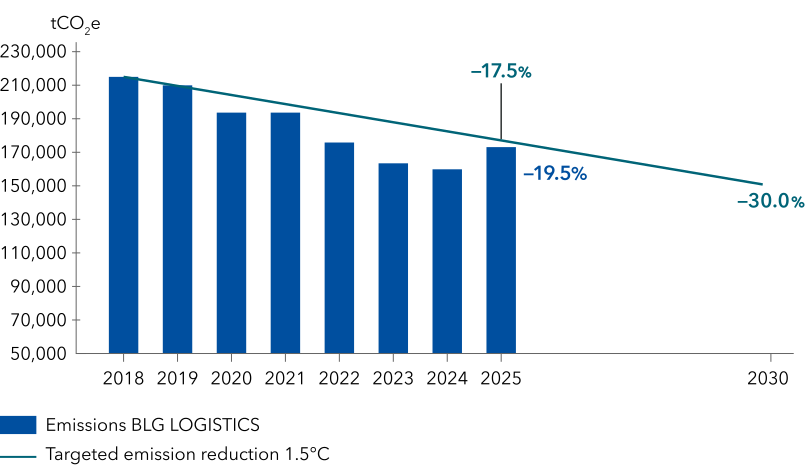
For Scope 3 emissions, we are targeting an absolute reduction of 30 percent by 2030 compared with the base year 2018. In 2025, we achieved a reduction in Scope 3 emissions of 19.5 percent compared with the base year, thereby exceeding the interim target of a 17.5 percent reduction. The increase in Scope 3 emissions observed in 2025 is primarily attributable to the implementation of projects involving higher procurement and investment volumes.
Absolute greenhouse gas emissions (Scope 3) from 2018 to 2025 and objective for 2030 (tCO2e)
Across all three Scopes, we produced 206,143 tCO2e in 2025, which corresponds to a total decrease of 3.5 percent compared to the previous year. In the reporting year, we once again significantly exceeded our annual target for both Scope 1 and Scope 2 emissions, and those within Scope 3.
Certificates and financed climate protection projects (E1-9)
We are pursuing our climate objectives according to the clear principle of avoiding before reducing before offsetting. Accordingly, greenhouse gas reductions are the primary focus of our target achievement. We also support selected climate protection projects through the purchase and retirement of carbon credits. Since 2020, we have calculated emissions from our company car fleet and business air travel, and have supported climate protection projects certified under the Gold Standard, which contribute to reducing greenhouse gas emissions by an equivalent amount. In 2025, we retired 1,212 tons of carbon credits. These credits were from a project to provide solar cookers in the Chinese province of Henan, and from a small-scale hydropower project on the Sanjoin Nala, a tributary in India. The certificates acquired are not counted toward our emission reduction targets but serve to complement our decarbonization actions.