

For us, acting sustainably means striking a balance between economic performance, social commitment and responsibility for the environment. By considering the three dimensions ENVIRONMENT, SOCIAL and GOVERNANCE in an integrated manner, we develop a holistic understanding of opportunities, risks and interdependencies and have defined eight fields of action within these pillars. Each field of action is underpinned by clearly defined targets; we drive necessary transformation and actively contribute to progress.
The United Nations’ Sustainable Development Goals (SDGs) provide an additional framework for global sustainable development. We contribute to their achievement and focus our activities on ten selected SDGs that are particularly relevant to our business. In addition, we align ourselves with recognized external initiatives and frameworks: in 2022, we signed the UN Global Compact and committed to integrating its ten principles into our strategy, corporate culture and day-to-day business operations.
Sustainability is an integral component of our corporate strategy and permeates all processes, functions and responsibilities. We follow a principle of continuous improvement and regularly measure progress against our targets. We systematically evaluate the insights gained while remaining open to external input and sector-specific developments. The experience gained over recent years confirms the effectiveness of our strategy. This success, together with increasing expectations from customers, employees and regulators, encourages us to continue pursuing our chosen path.
Our fields of action
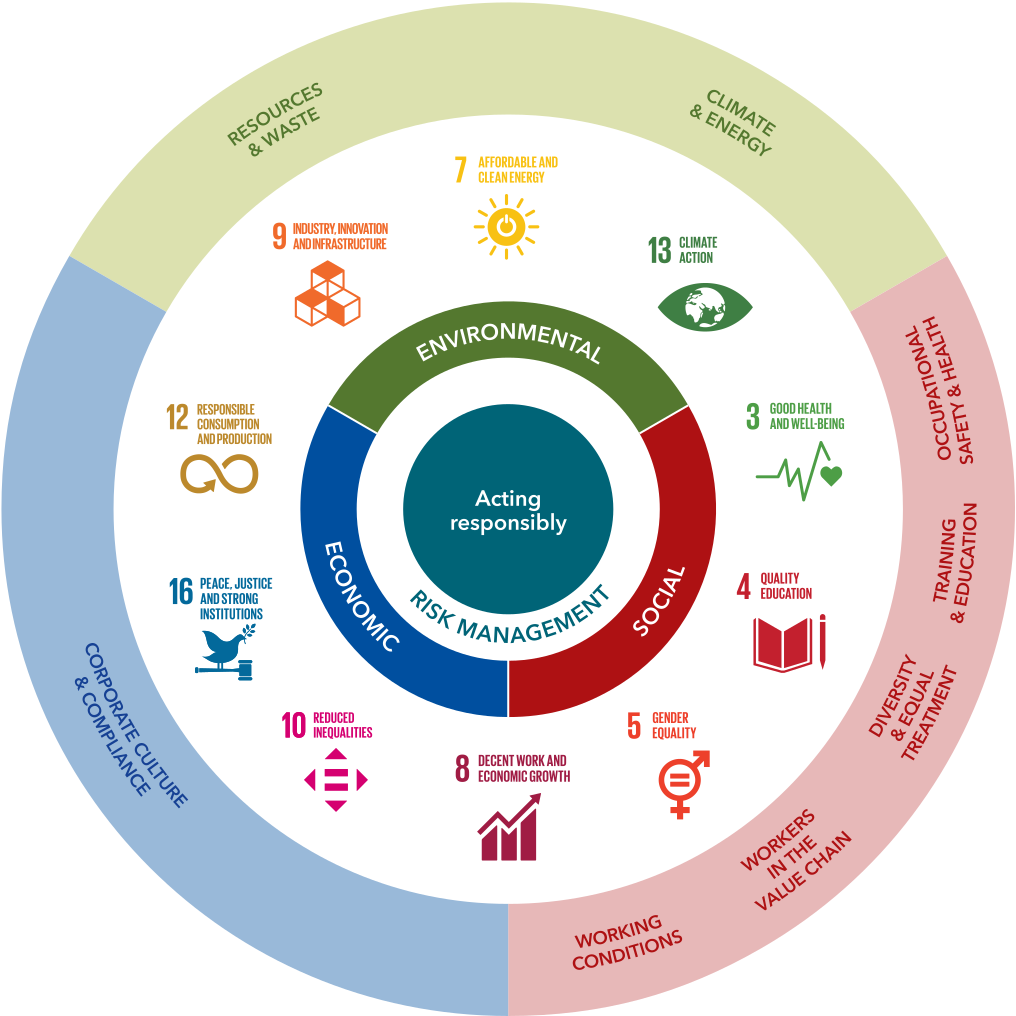
Values, guidelines and management systems
Our corporate values of “integrity, determination, dynamism, passion and collaboration” form the foundation of our corporate culture and serve as guiding principles for our sustainability management. Our set of guidelines unites the legal and ethical standards that we are committed to upholding. It provides employees with guidance in their day-to-day work, and makes it clear to partners and suppliers what our expectations are regarding collaboration and business relationships. In addition, our compliance system ensures adherence to all relevant laws and fundamental principles; further details can be found in the chapter G1-Governance.
Our sustainability strategy is supported by established and largely certified management systems in the areas of quality management, environmental management, energy management and occupational health and safety management. We have also implemented a compliance management system. Detailed information on the individual systems is provided in the relevant sections of this report.
Rankings and awards
BLG Handelslogistik GmbH & Co. KG is a member of the Advisory Board of the Lean & Green not-for-profit initiative, and we won the Lean & Green Award back in 2015, with the 1st Star following in 2021. Thanks to our consistent CO2 reductions, we were awarded the Lean & Green 2nd Star in 2025. To ensure an objective assessment of our sustainability performance, we undergo regular external evaluations. In the reporting year, this again included responding to the EcoVadis questionnaire. Compared with the previous year, we improved both our overall score and our percentile ranking, and were once again awarded a bronze medal (link: recognition.ecovadis.com/rRMjCAnplESRQ9u1a1DVSQ). In the reporting year, we also submitted our emissions data to the Carbon Disclosure Project (CDP) for the fifth time, achieving a “C” rating for our efforts in the climate area.
Strategy, business model and value chain (SBM-1)
Information on our corporate strategy, business model and value chain can be found in the chapter Fundamentals.
Interests and views of stakeholders (SBM-2)
When formulating the direction and the goals of our sustainability management, we take the perspectives and interests of our stakeholders into account. This includes all persons or groups that are directly or indirectly affected by our business, both now and in the future. We regularly exchange information with many stakeholders, giving special priority to our customers’ interests. We communicate with them closely and fairly – all the more so if we support them directly at our branches or operate on their premises. During the development of new logistics locations or joint large-scale projects, this cooperation intensifies even more, giving us focused, valuable feedback.
Our employees’ expectations are of equal importance to us, which is why we incorporate them into our decisions. The dialog formats described in the table, as well as personal exchanges among colleagues and with managers, play a central role here. In the area of sustainability, we survey the people at BLG LOGISTICS annually about employee mobility – reducing the associated emissions is part of our climate protection strategy. We are in constant communication with the City of Bremen, our largest shareholder. We provide information, participate in exchanges and support the Bremen climate protection goals through our own commitment and our ambitious climate objectives.
Stakeholder group |
|
Form of dialog |
|
Frequency |
|---|---|---|---|---|
Employees |
|
Employee app |
|
Regularly |
|
Employee magazine |
|
Regularly |
|
|
Employee suggestion scheme |
|
Regularly |
|
|
Employee/feedback meetings |
|
Regularly |
|
|
Management evaluation |
|
Annually |
|
|
Social media and website |
|
Continuously |
|
|
Training fairs and school events |
|
Regularly |
|
|
Works meeting |
|
4x annually |
|
Social partners |
|
Meetings and working committees |
|
Regularly |
|
Works meeting |
|
4x annually |
|
Supervisory Board |
|
Supervisory Board meetings |
|
4-5x annually |
Owners/Shareholders |
|
Annual General Meeting |
|
Annually |
|
Publication of the annual report and Sustainability Report |
|
Annually |
|
|
Supervisory Board meetings |
|
4-5x annually |
|
Customers |
|
Regular meetings with existing customers |
|
Weekly to at least annually |
|
Direct contact via Sales |
|
As required |
|
|
Trade fair participation and conference contributions |
|
Regularly |
|
|
Memberships, discussions in working groups and networks of associations, initiatives and organizations |
|
Regularly |
|
|
Sustainability surveys and ratings (CDP, EcoVadis, SAQ) |
|
Annually, additionally as required |
|
Lenders/Banks |
|
Supervisory Board meetings |
|
4-5x annually |
|
Meetings with each bank |
|
1-2x annually |
|
|
Banking day |
|
Annually |
|
Associations |
|
Information events |
|
As required |
|
Working groups and steering committees |
|
Regularly |
|
|
Meetings |
|
Regularly |
|
|
General meetings |
|
Regularly |
|
Representatives from academia/research and teaching |
|
Cooperation/participation in research projects |
|
As required |
|
Internships |
|
As required |
|
|
Conferences |
|
As required |
Memberships
Our participation in the Überseehafen Round Table, which is organized by bremenports and led by the Senator for Economic Affairs, Ports and Transformation, also underlines our commitment. As a member of the steering group, we are working with the participating companies to achieve the goal of ensuring a permanently resilient energy supply at Bremerhaven international port, while also making the site CO2-neutral. We reach additional stakeholders through tailored formats (see table above). In addition, we benefit from the fact that virtually all significant stakeholders have a seat on the Supervisory Board, with representatives from business, banking, the workforce, trade unions and the public sector.
We believe that the transformation to a sustainable economy can only be achieved by working together. Accordingly, we collaborate within associations and expert bodies with partners, institutions and even competitors to address current challenges systematically. During the reporting year, our Chief Executive Officer, Matthias Magnor, was a member of the Executive Committee of the Central Association of German Seaport Operators (ZDS), which constitutes a central link between the port industry and policymakers. Since 2025, he has also served as Treasurer of the German Transport Forum (DVF) and as a member of the Board of the German Logistics Association (BVL). We are also involved in the BVL “Nachhaltig gestalten” [“Acting sustainably”] group and are a member of the steering group for the “Sustainable Heavy Goods Transport” taskforce at the German Energy Agency (dena). This platform aims to reduce emissions in heavy goods transport, support the energy transition, and promote long-term planning and investment security. In the reporting year, several publications were issued on the decarbonization of heavy goods transport in Germany, including a dossier on challenges and solutions for the expansion of charging infrastructure for e-trucks, in addition to a fact sheet on the opportunities and risks of HVO100 in heavy goods transport. As a long-standing member of the Association of European Vehicle Logistics (ECG), we represent the interests of the finished vehicle logistics industry in Europe. The ECG, and in particular its ECG Academy training program, serves as an important platform for professional exchange within the sector.
Important memberships in associations, organizations and initiatives
AKJ Just-in-Time Working Group
Association of European Vehicle Logistics (ECG)
BHV-Bremen Port Association
German Logistics Association (BVL)
Diversity Charter
German Transport Forum, Berlin
DSLV German Freight Forwarding and Logistics Association, Berlin
FEPORT Federation of European Private Port Companies and Terminals, Brussels
Institute of Shipping Economics and Logistics (ISL)
Lean & Green
Mobility2Grid
-
Partnership of Environmental Enterprises (PUU)
-
Stifterverband für die deutsche Wissenschaft, Essen
-
“Sustainable Heavy Goods Transport” taskforce of the German Energy Agency (dena)
-
Sponsor of the Bremer Diversity Award
-
UN Global Compact Network Germany
-
Bremische Häfen business association
-
Association of German Transport Companies (VDV), Berlin
-
Wirtschaftsverband Weser business association, Bremen
-
Central Association of German Seaport Operators (ZDS), Hamburg
Interaction of material impacts, risks and opportunities with strategy and business model, and financial effects (SBM-3)
The material impacts, risks and opportunities (IROs) identified in the materiality assessment arise directly from our business model as a logistics service provider. In particular, climate-related risks, regulatory developments and customer requirements for low-emission transport and logistics solutions influence the strategic development of our service portfolio and are assessed as relevant to the business over the long term.
The identified material topics are considered in strategic planning and incorporated into investment decisions. Sustainability-related risks are integrated into existing corporate management and risk management processes and are reviewed on a regular basis. A systematic linkage to strategic planning is established in particular through quarterly reporting on sustainability metrics, and through the Board of Management’s involvement in management of the defined targets.
Detailed information on our risk management can be found in the chapter Opportunity and risk report.
Process to identify and assess material impacts, risks and opportunities, as well as information to be reported (IRO-1)
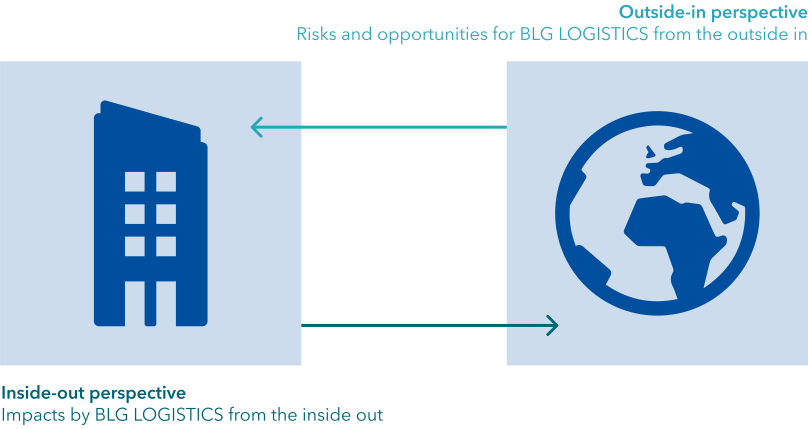
BLG LOGISTICS’ materiality assessment is based on the principle of double materiality and considers both the impact materiality (inside-out) and financial materiality (outside-in) perspectives. Impact materiality assesses the positive and negative impacts of our business activities on people and the environment. Financial materiality examines the sustainability-related risks and opportunities that arise for BLG LOGISTICS as a company. A topic is considered material if it is assessed as such under at least one of these two perspectives.
Perspectives of the double materiality assessment
The materiality assessment process is structured into three sequential steps: long list, mid list and short list. In the first step, a comprehensive long list of potentially material sustainability topics was compiled, taking into account relevant standards. Following an initial, reasoned exclusion of certain topics by the sustainability team, the long list was condensed into a mid list. In the subsequent step, potential and actual impacts, risks and opportunities (IROs) were identified and assessed along the upstream and downstream value chain. The identification process took place in individual workshops involving the sustainability team and the responsible specialist departments, and was supported by additional desk research. The close involvement of specialist departments ensured that, in addition to technical expertise, the perspectives of relevant stakeholders, including employees, suppliers, customers, shareholders, financial market participants and public authorities, were adequately considered.
Process flow of our double materiality assessment
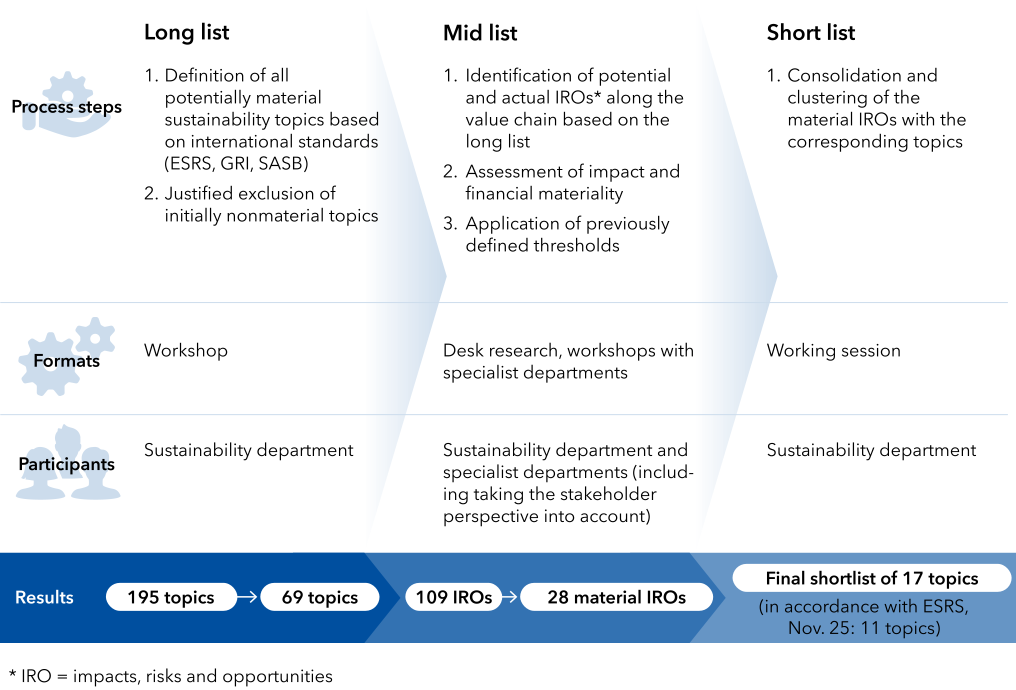
The IROs were assessed using a scale based on the assessment criteria of risk management. Impacts were assessed based on scale, scope, irremediability (for negative impacts) and, in the case of potential impacts, likelihood of occurance. Scale, scope and irremediability jointly determine the overall severity of an impact. For potential negative impacts on human rights, the severity takes precedence over the likelihood. Risks and opportunities were assessed based on scale and likelihood of occurrence. The evaluation of impacts, risks and opportunities was conducted by the sustainability team and, where required, with the involvement of additional specialist departments and the risk management team.
Based on defined thresholds, it was then determined which IROs are to be classified as material. This was used to draw up the short list of material IROs and the corresponding material sustainability topics. The results of the double materiality assessment were validated by the Sustainability Board and presented to the entire Board of Management. Identified sustainability-related risks and opportunities were subsequently transferred to Group Risk Management for further processing.
|
|
ESRS topic |
|
Sub-topic |
|---|---|---|---|---|
ENVIRONMENT |
|
E1-Climate Change |
|
Climate change adaptation |
|
E5–Resource Use and Circular Economy |
|
Waste |
|
SOCIAL |
|
S1-Own Workforce |
|
Working conditions (secure employment, adequate wages, work-life balance) |
|
S2–Workers in the Value Chain |
|
Working conditions |
|
GOVERNANCE |
|
G1-Business Conduct |
|
Corporate culture, including anti-corruption and anti-bribery, protection of whistleblowers |
Material impacts, risks and opportunities and disclosure requirements included in the Sustainability Statement (IRO-2)
The following table provides an overview of BLG LOGISTICS’ material impacts, risks and opportunities, including their location in our own business activities or along the upstream and downstream value chain.
Topic |
|
IRO |
|
Description |
|
Value chain |
||||||||
|---|---|---|---|---|---|---|---|---|---|---|---|---|---|---|
E1 – Climate Change |
||||||||||||||
Climate change adaptation |
|
|
|
The impacts of climate change (e.g., extreme weather events) may lead to business disruptions and pose an acute risk to assets and business processes. |
|
|
||||||||
|
|
|
Structural and process-related adaptation measures to climate change can enhance operational resilience, generate additional revenue and support customer acquisition. |
|
|
|||||||||
Climate change mitigation |
|
|
|
A proactive climate protection strategy contributes to decarbonization and to achieving the 1.5-degree target of the Paris Agreement through concrete reduction measures. |
|
|
||||||||
|
|
|
Operation of buildings and transport processes result in greenhouse gas (GHG) emissions. |
|
|
|||||||||
|
|
|
Regulatory requirements relating to GHG emissions in road freight transport lead to rising costs for the use of fossil energy sources. |
|
|
|||||||||
|
|
|
By consistently pursuing a climate strategy focused on the absolute reduction of GHG emissions, we position ourselves as a reliable partner for our customers and safeguard our long-term competitiveness. |
|
|
|||||||||
Energy |
|
|
|
Improving energy efficiency, transitioning to renewable electricity and heat supply, switching to alternative fuels and drive systems, and raising employee awareness all contribute to the energy transition. |
|
|
||||||||
|
|
|
Fossil fuels are still used, particularly for fuel requirements in heavy goods transport and for heating at our sites. |
|
|
|||||||||
E5 – Resource Use and Circular Economy |
||||||||||||||
Waste |
|
|
|
Targeted waste separation and the reuse of load carriers enable us to increase recycling rates and conserve resources. |
|
|
||||||||
|
|
|
Our operations, particularly order-picking, relocation and technical processing, generate non-hazardous waste and, to a lesser extent, hazardous waste. |
|
|
|||||||||
S1 – Own Workforce |
||||||||||||||
Working conditions (Secure employment) |
|
|
|
Long-term employment relationships and a reliable role as an employer provide employees with job security. |
|
|
||||||||
|
|
|
Demographic change increases the risk of a shortage of qualified workers. Vacancies may not be filled in a timely or appropriate manner, potentially leading to productivity losses and disruptions to business operations. |
|
|
|||||||||
Working conditions (Adequate wages) |
|
|
|
Remuneration based on collective agreements ensures reliable, transparent and appropriate pay above statutory minimum standards. |
|
|
||||||||
Working conditions (Work-life balance) |
|
|
|
Flexible working models expand the applicant pool, facilitate the recruitment of qualified specialists, including from remote regions, and support the filling of critical roles. |
|
|
||||||||
Social dialogue, freedom of association, works councils, participation rights of workers and collective bargaining |
|
|
|
The existence and promotion of works councils supports structured representation of employee interests. |
|
|
||||||||
|
|
|
Collective bargaining may lead to work stoppages if no agreement is reached, resulting in operational disruptions. |
|
|
|||||||||
Health and safety |
|
|
|
Logistics activities can be physically demanding and involve increased occupational safety risk, particularly due to the use of machinery, mechanical and human error, or external factors. |
|
|
||||||||
|
|
|
Organizational overload may result in productivity losses, errors, increased accident risk, absenteeism due to illness, and associated costs. |
|
|
|||||||||
Training and skills development |
|
|
|
Training programs strengthen employees’ professional and personal skills. |
|
|
||||||||
|
|
|
A broad range of apprenticeship programs provides junior employees with a qualified entry into working life. |
|
|
|||||||||
|
|
|
Mandatory contributions to the State of Bremen’s training support fund result in additional financial burdens. |
|
|
|||||||||
|
|
|
Training programs and post-completion employment opportunities support the recruitment and long-term retention of qualified professionals and junior staff. |
|
|
|||||||||
Diversity and equal treatment |
|
|
|
If the share of employees with disabilities (or equivalent status) falls below 5 percent, statutory compensation payments are required. |
|
|
||||||||
|
|
|
Diverse teams bring different perspectives into decision-making processes, improve decision quality and expand the pool of qualified talent. |
|
|
|||||||||
S2 – Workers in the Value Chain |
||||||||||||||
Working conditions |
|
|
|
Some activities along the logistics supply chain can be physically demanding and may be associated with increased occupational health and safety risks, in addition to strain related to working hours and work organization. This is particularly true for contract workers and truck drivers. |
|
|
||||||||
G1 – Business Conduct |
||||||||||||||
Corporate culture including anti-corruption and anti-bribery, protection of whistle-blowers |
|
|
|
A robust compliance management system contributes to a safe working environment with regard to anti-discrimination, health protection, environmental and climate protection, as well as fair competition. |
|
|
||||||||
|
|
|
Violations of applicable law can cause significant long-term damage to the company. |
|
|
|||||||||
|
|
|
An effective whistle-blower system enables the identification and remediation of internal misconduct. |
|
|
|||||||||
|
||||||||||||||


 Downstream value chain
 Since we are publishing a double materiality assessment in accordance with ESRS for the first time this year, there are no changes in the material impacts, risks and opportunities compared to the previous year. Going forward, we will review and update our double materiality assessment on a regular basis.
An overview of the disclosure requirements included in the non-financial statement, as well as a list of data points derived from other EU legislation, can be found in the chapter Other content.